


BLOG
Travel Tips
Traveling Internationally With a Newborn or Infant: Documents, Bassinets, and Getting Through the Airport
Flying abroad with a baby for the first time tends to produce a particular kind of dread, most of it about the flight itself, the crying, the eight hours trapped in a metal tube with a tiny person who cannot be reasoned with. The flight is rarely the real problem. What catches parents out is the paperwork they did not know they needed and the airport logistics nobody warned them about. Sort those in advance and the trip becomes far more manageable than the horror stories suggest.
The Documents: Your Baby Needs Their Own Passport
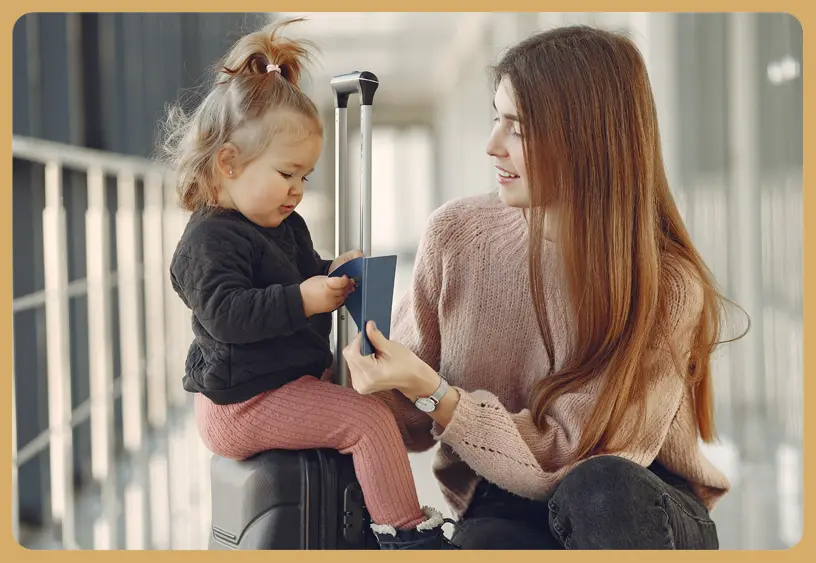
For international travel, every passenger needs their own passport, including a newborn. There are no exceptions. A baby requires a passport just like an adult.
Applying for an infant passport usually requires both parents or guardians to appear in person, and processing can take several weeks. If you are a sole guardian, you may need extra documentation proving custody. If your destination requires a visa, the baby must also have one.
Always check entry requirements for your destination, as some countries may request additional documents such as a birth certificate.
Newborn Age Limits and the Fit-to-Fly Letter
Airlines typically require infants to be at least 7 to 14 days old before flying, depending on the carrier. Some airlines may require a medical certificate for very young newborns confirming they are fit to fly.
It is strongly recommended to consult a pediatrician before any long flight with a newborn, both for medical advice and to confirm suitability for air travel.
Always check the specific airline’s infant policy, as requirements vary between carriers.
Lap Infant or a Seat of Their Own
Children under two years old can usually travel as lap infants, meaning they sit on a parent’s lap instead of occupying a seat. On international flights, this is generally not free and is often charged at around 10 percent of the adult fare.
An alternative is purchasing a seat and using an approved car seat, which is considered safer by many aviation authorities, especially for long-haul flights.
A common strategy for couples is booking a window and aisle seat in a three-seat row, increasing the chance the middle seat remains empty.
Bassinets: How They Actually Work
Airline bassinets attach to bulkhead walls and are available only in specific seats. They are usually provided free of charge on long-haul flights.
However, they are limited in number, often just a few per aircraft, and cannot be guaranteed even if requested in advance.
They also have weight and size limits, typically suited for babies up to around 20 lbs and 26 inches. Babies must be removed during takeoff, landing, and turbulence.
It is best to request a bassinet and bulkhead seat as early as possible and confirm again at check-in or the gate.
Getting Through Security With Baby Supplies
Baby food, formula, and breast milk are allowed through airport security even if they exceed the usual 100ml liquid limit.
These items must be declared at the security checkpoint and may be screened separately. Cooling packs are also allowed.
Clear containers are recommended, as opaque containers may trigger additional inspection.
- Carry enough feeding supplies for the entire journey plus delays
- Declare all baby liquids at security screening
- Expect additional inspection of baby food or milk containers
Moving Through the Airport
Airports involve long walking distances, and traveling with a baby adds additional logistical strain. A lightweight stroller is useful and can usually be gate-checked at the aircraft door.
A baby carrier can also help keep hands free for documents and luggage while keeping the baby secure.
It is important to keep essential items such as diapers, wipes, and feeding supplies easily accessible during the journey.
During Takeoff and Landing
Feeding the baby or using a pacifier during takeoff and landing helps reduce ear pressure discomfort caused by cabin pressure changes.
When You Want the Logistics Handled
Traveling with an infant involves managing documents, luggage, security checks, and immigration, which can be overwhelming during connections.
Meet-and-greet services can assist by handling baggage, guiding passengers through immigration and security, and helping streamline airport navigation for families traveling with infants.
Published on: 04/Jul/2026
Category
Travel Trends
How AirportAssist Redefines Luxury Travel at Prague Václav Havel Airport (PRG)
Prague is a city where history and modern life exist in perfect harmony, and that atmosphere begins the moment you arrive at Prague Václav Havel Airport (PRG). The airport combines contemporary architecture with a calm, welcoming environment, offering travelers an introduction to the city's timeless charm.
Published on: 04/Aug/2026

Travel Trends
What Happens If You Miss a Connecting Flight Because of Slow Immigration
What Happens If You Miss a Connecting Flight Because of Slow Immigration? The passport queue has barely moved in twenty minutes, yet your onward flight is already boarding. It's a situation many international travelers experience, especially at major airports where multiple long-haul flights arrive simultaneously and thousands of passengers head to immigration at the same time.
Published on: 04/Aug/2026
How To Book Airport Assistance Services:
Service Booking Form: https://www.airportassist.com/book-service
 service@airportassist.com
 +1 302 300 1122
  +971 52 790 5292
 Liked the article? We would love to know your comments/feedback.
Drop in a message, in the comments box below or feel free to get in touch with us at service@airportassist.com.