


BLOG

Travel Trends
What Happens If You Miss a Connecting Flight Because of Slow Immigration
The passport queue has barely moved in twenty minutes and your onward flight is boarding. This happens to a lot of people, especially at big hubs where several long-haul flights land at once and everyone hits border control together. Whether you are simply rebooked for free or left buying an expensive new ticket comes down, almost entirely, to how you booked the journey in the first place.
First, You Usually Should Not Be Clearing Immigration at All
Worth clearing up one misconception before anything else. If your trip is booked as a single journey with your bags checked through to the end, you normally stay airside through the whole connection and never go near passport control at the airport in the middle. You only deal with immigration and customs when you actually arrive at your final destination.
The United States is the great exception, and it catches people out constantly. America makes you clear customs at the first airport you land at, even when you are just passing through to somewhere else. That means going through immigration, waiting for your checked bag, carrying it through customs, then handing it back in for the next leg. Canada works the same way, and Australia broadly does too. So if the queue eating your connection is at a US airport, that is the system working as intended, and it is precisely where tight connections fall apart.
The One Question That Decides Everything: One Ticket or Two
Who pays depends on whether both flights were on the same booking.
On a single ticket, even one that spans two partner airlines under the same reservation, the airline that sold you the trip has to get you to your destination. Miss the connection and they rebook you on the next flight for free. It does not matter whether the cause was a late inbound aircraft or a border hall that took two hours to get through. If the delay strands you overnight, the same single booking is what lets you ask for a hotel and food.
Separate tickets are a different world. Say your first flight is on one airline and your second on another, bought independently because the total came out cheaper. The second airline has no idea the first one exists. To them you are a no-show for a flight you paid for, and they owe you nothing. There is usually no free rebooking, and you may have to buy a fresh ticket at whatever the fare happens to be at the desk that day, which on a long-haul leg can run well into four figures.
Why Slow Immigration Rarely Gets You Cash on Top
Being rebooked is one thing. Getting a cash payout is another, and immigration delays almost never qualify for the second.
EU261, along with the near-identical UK261 that replaced it in Britain after Brexit, lets passengers claim a fixed cash sum when they land at their final destination three hours or more late. The amounts run from €250 to €600, or £220 to £520 in the UK. Everything turns on what caused the delay. The airline does not have to pay when the cause was something it could not have prevented, and a swamped border-control hall is the standard example.
Those queues are run by government immigration officers, not the carrier, so the airline can quite reasonably say the wait had nothing to do with it.
And the cash rules only bite if you had a proper connecting ticket to begin with. The two flights have to share one booking reference. This is why the cheap self-transfer route, stitched together from two budget bookings, leaves you with no rebooking and no compensation when it goes wrong.
There is one shift worth flagging. European courts have started chipping away at how readily airlines can blame the airport. A 2026 case involving security-queue delays at a German airport found that a carrier could not always rely on extraordinary-circumstances arguments when its own decisions contributed to the delay. This does not turn immigration queues into compensable delays, but it shows the boundary is still evolving.
What to Do in the Moment
The best moment to act is while you are still in the queue and can see the connection slipping. Flag it immediately to airport or airline staff. Many large airports have teams dedicated to assisting tight connections.
Once the flight has gone, go to the airline transfer desk rather than the main check-in area. If you are on a single ticket, request the next available flight and ask for hotel and meal support if you are delayed overnight.
Keep all boarding passes and delay evidence, since any later claim depends on documentation.
If you are on separate tickets, contact your travel insurance provider. Missed-connection cover is typically the only way to recover costs in that scenario.
How to Avoid This Problem
Most of this risk can be reduced before you even leave home.
Booking a single through-ticket is the strongest protection against missed connections.
Allow significantly longer layovers when entering countries like the United States or Canada where immigration is mandatory at first entry.
Avoid self-transfer itineraries unless you have strong insurance coverage.
For high-risk journeys, consider fast-track or meet-and-assist services designed specifically for tight international connections.
Published on: 04/Jul/2026
Category

Travel Trends
Why Warsaw Chopin Airport (WAW) Feels Different With AirportAssist.com’s VIP Travel Services
The Grand Entrance Warsaw Chopin Airport has a way of humbling even the most seasoned traveler. One minute you're stepping out of a chauffeured car, sunglasses still on, thinking you've got the whole airport game figured out.
Published on: 17/Oct/2026
Travel Trends
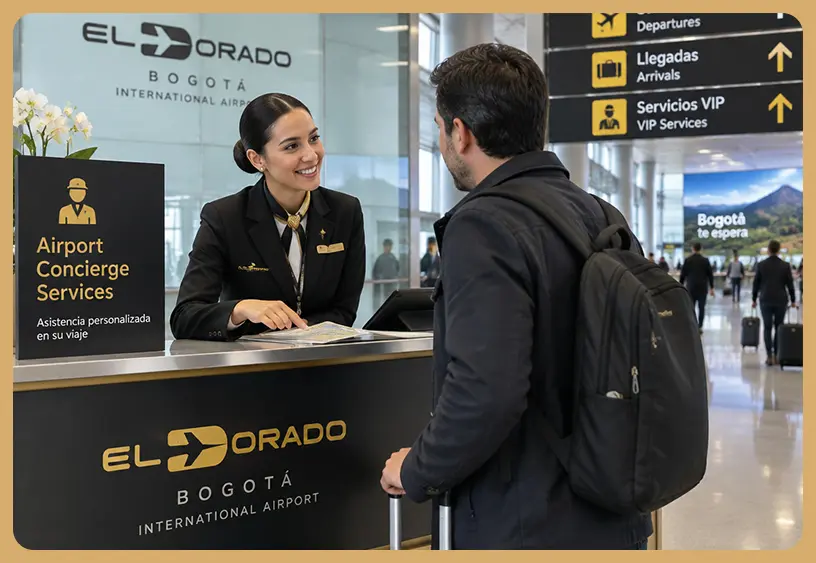
Why Travelers in the Know Swear by Airport Concierge Services at Bogotá El Dorado (BOG)
You have airports that you go through and there are airports that are whole winged cities. The El Dorado International (BOG) of Bogota is of the latter.
Published on: 17/Oct/2026
How To Book Airport Assistance Services:
Service Booking Form: https://www.airportassist.com/book-service
 service@airportassist.com
 +1 302 300 1122
  +971 52 790 5292
 Liked the article? We would love to know your comments/feedback.
Drop in a message, in the comments box below or feel free to get in touch with us at service@airportassist.com.