

BLOG
Travel Trends
Traveling Internationally With a Newborn or Infant: Documents, Bassinets, and Getting Through the Airport
Flying abroad with a baby for the first time tends to produce a particular kind of dread, most of it about the flight itself, the crying, and the long hours spent on an aircraft with a newborn. In reality, the flight is rarely the biggest challenge. The real issues are the paperwork and airport logistics that many parents do not anticipate. Planning these details in advance makes international travel much easier.
The Documents: Your Baby Needs Their Own Passport
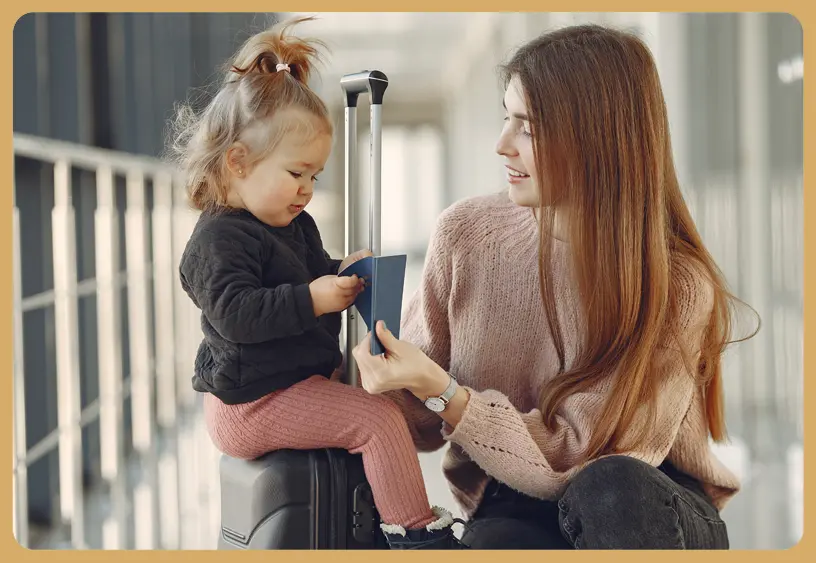
Every passenger traveling internationally must have their own passport, including newborn babies. There are no exceptions, regardless of the baby's age.
Parents should apply well in advance because processing often takes several weeks. In most cases, both parents or legal guardians must be present during the application process. Sole guardians may need to provide additional documentation. If the destination country requires a visa, the infant will also need one.
Before traveling, always check your destination country's entry requirements, as some nations request extra documents for children, including birth certificates to confirm the relationship between parent and child.
Newborn Age Limits and Fit-to-Fly Requirements
Most airlines have minimum age requirements for infants, typically between seven and fourteen days old. Some carriers may not allow very young newborns to fly without medical clearance.
Parents should consult their pediatrician before booking international travel with a newborn and review the airline's infant travel policy carefully, as requirements differ between airlines.
Lap Infant or Buying a Separate Seat
Children under two years old can usually travel as lap infants, meaning they sit on a parent's lap instead of occupying their own seat.
Although many people assume lap infants travel free, international flights generally charge around 10% of the adult fare plus applicable taxes and fees.
Another option is purchasing a separate seat and using an airline-approved child car seat. While this is considered the safest option during turbulence, it is also more expensive.
Parents traveling together may improve their chances of having extra space by booking the window and aisle seats while leaving the middle seat empty, if available.
How Airline Bassinets Work
For long-haul flights, onboard bassinets can significantly improve comfort for both parents and babies. These bassinets are attached to bulkhead seats and are provided free by many airlines.
However, there are several limitations:
- They are only available at bulkhead seats.
- They have weight and height limits, usually around 20 pounds (9 kg) and 26 inches (66 cm).
- Only a small number are available on each aircraft.
- Babies must be removed during takeoff, landing, and whenever the seatbelt sign is illuminated.
Parents should request a bassinet immediately after booking their flight and confirm the request again during check-in or at the departure gate.
Airport Security With Baby Supplies
Airport security rules are more flexible for parents traveling with infants. Baby formula, breast milk, baby food, and similar essentials are exempt from the standard 100 ml liquid restriction.
When passing through security:
- Inform the security officer that you are carrying baby feeding supplies.
- Remove these items for separate screening.
- Expect additional inspection, including explosive residue testing.
- Cooling packs used for breast milk are generally permitted.
- Clear bottles usually pass through screening more easily than opaque containers.
A practical guideline is to carry enough milk or formula for every two to three hours of travel, along with extra supplies in case of delays.
Moving Through the Airport
Large airports often involve long walks between terminals and gates. A lightweight, foldable stroller can make the journey much easier. Most airlines allow parents to use the stroller until boarding before gate-checking it.
A baby carrier is another useful travel accessory because it keeps both hands free for handling luggage, travel documents, and boarding passes.
Parents should keep essential baby items easily accessible, including:
- Diapers and changing supplies.
- An extra outfit for the baby.
- A spare change of clothes for the parent.
- Feeding supplies and snacks.
During takeoff and landing, feeding the baby or offering a pacifier can help relieve ear pressure caused by cabin altitude changes.
When Airport Assistance Makes Travel Easier
Traveling with a newborn, luggage, a stroller, and travel documents can be overwhelming, especially during international connections or at unfamiliar airports.
A meet-and-greet airport assistance service can simplify the experience by helping families with baggage, guiding them through immigration and security, providing priority assistance where available, and ensuring a smoother journey from arrival to onward transportation.
Published on: 04/Aug/2026
Category
Travel Trends
The Benefits of AirportAssist VIP Services at Jakarta Soekarno-Hatta International Airport (CGK)
The moment you enter Jakarta Soekarno-Hatta International Airport (CGK) and you will soon find out why the term Indonesia's main gateway can be said about the airport. It is gigantic and tons of millions of people transit within a year.
Published on: 14/Sep/2026

Travel Trends
Luxury Meets Convenience: VIP Airport Services at Brisbane Airport (BNE) by AirportAssist
Let's face it: airports don't exactly feel like places where luxury starts, what with dragging bags between gates, locating the correct terminal and standing in endless security queue lines. All of this is enough to test your patience, so it's no surprise that many passengers are already worn out when they reach their gate.
Published on: 14/Sep/2026
How To Book Airport Assistance Services:
Service Booking Form: https://www.airportassist.com/book-service
 service@airportassist.com
 +1 302 300 1122
  +971 52 790 5292
 Liked the article? We would love to know your comments/feedback.
Drop in a message, in the comments box below or feel free to get in touch with us at service@airportassist.com.